There is no translation available.

   OdourCollect is an innovative citizen science platform developed to enhance the monitoring and management of odour pollution, especially in complex settings with multiple emission sources.

   By actively involving local communities in the detection and reporting of odour events, the platform produces collaborative, real-time odour maps that are integrated with meteorological and regulatory information. This participatory methodology not only improves the characterisation and localisation of odour impacts but also facilitates compliance with the UNE 77270:2023 standard. Consequently, OdourCollect serves as an effective tool for environmental consultants, public authorities, and citizens to comprehensively manage odour-related environmental challenges.

R. Arias* & J. Burbano

Science for Change, C. de Vilamarí, 50, Planta 7, Eixample, 08015 Barcelona
* rosa.arias@scienceforchange.eu

There is no translation available.

   The Jagüel Wastewater Treatment Plant in Punta del Este, Uruguay, underwent an odor control improvement plan ahead of a major renovation.

    A study by Ambiente et Odora measured H₂S emissions, modeled odor dispersion with CALPUFF, and identified key sources. Corrective actions included improved ventilation in centrifuge rooms, replacement of biofilters with granular activated carbon filters, and dosing ferric chloride into the slurry. These measures effectively reduced odors during the summer season, with no reported complaints.

A. Irigoyen*1, D. Berger1, A. Anton2, & C. Diaz2

1CIEMSA

2Ambiente et Odora

There is no translation available.

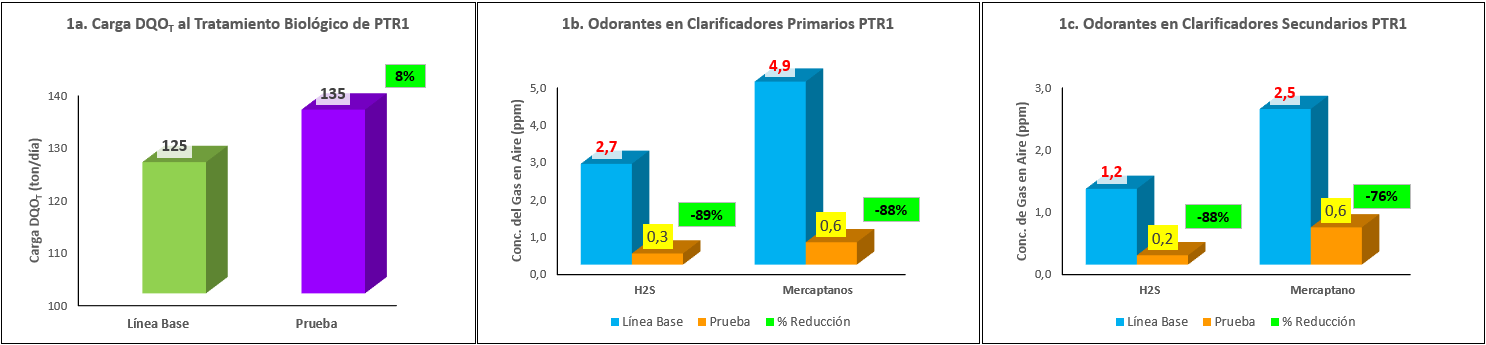
    The pulp industry faces challenges in balancing biological wastewater treatment with effective odor control.

   SciCorp’s micronutrient technology, based on plant extracts, selectively stimulates specific bacteria within biological sludge to significantly reduce emissions of malodorous gases such as hydrogen sulfide and mercaptans. Additionally, this technology enhances the biological treatment performance by increasing load capacity, lowering phosphorus concentration in the treated effluent, and reducing biosolid production, thereby optimizing overall wastewater treatment plant efficiency.

D. Maat1, J. Soza2 & J. Nuñez3

1SciCorp International, Mississauga ON, Canada.
2CMPC Pulp Maderas, Los Ángeles, Chile
3SciCorp International, Los Ángeles, Chile.

Altri articoli …

All the content here under Creative Commons license