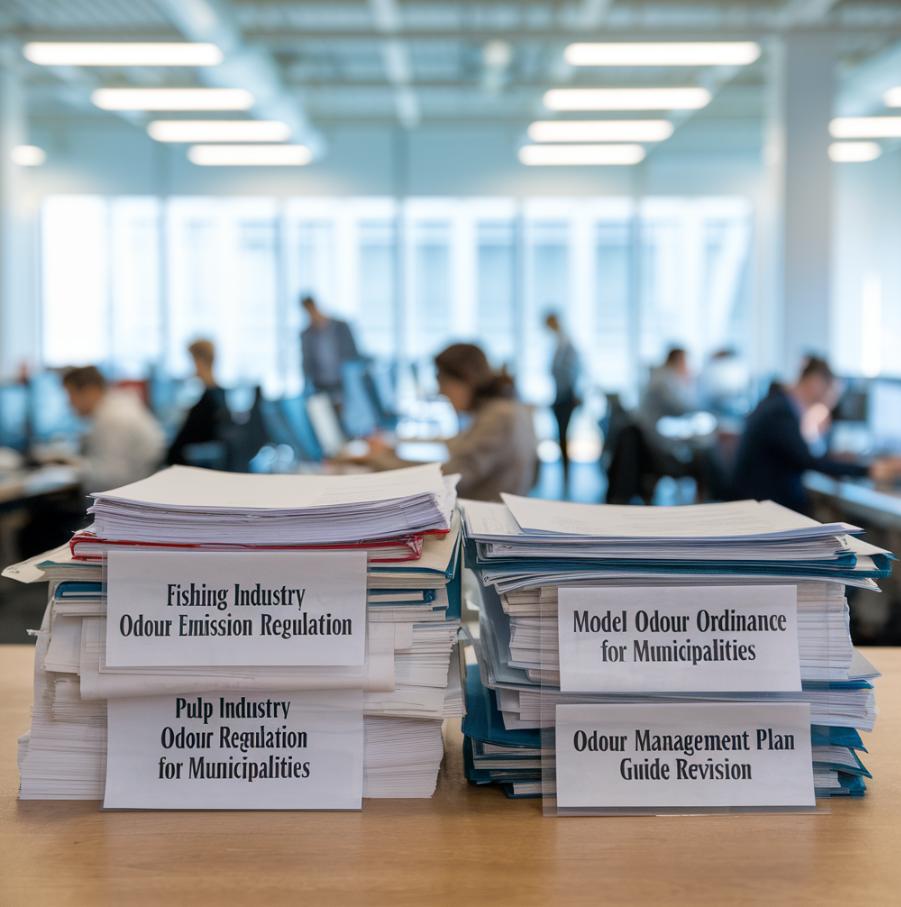
The Chilean Ministry of Environment has made significant progress in odour regulation throughout 2024, with plans to continue this momentum into 2025.
Here's a summary of the key developments:
Fishing Industry Odour Emission Regulation
The new odour emission regulation for the fishing industry has been approved by the Council of Ministers for Sustainability and Climate Change. This regulation will specifically target 23 fishmeal and fish oil plants, predominantly located in the Biobío region, and 9 fish feed plants, mostly in the Los Lagos region. The standard is currently awaiting the President's signature, after which it will be submitted to the Comptroller General's Office for review. It is expected to be finalised before March 2026, when the current government's term ends.
Pulp Industry Odour Regulation Review
In December 2024, a review of the odour regulation for the pulp industry was approved. This revision of the existing regulation has now moved to the next stage, awaiting the President's signature.
Model Odour Ordinance for Municipalities
The Ministry developed a model odour ordinance for municipalities. While this ordinance does not set specific odour limits, it outlines actions that can be taken in cases where odour activities are in place.
Looking ahead to 2025, the Ministry of Environment has outlined several initiatives:
- Wastewater Treatment Plant Study: A dedicated study focusing on odours from wastewater treatment plants is planned.
- Odour Management Plan Guide Revision: The Ministry intends to revise Chile's Odour Management Plan (PGO) guide.
These efforts demonstrate Chile's commitment to addressing odour-related issues and improving environmental quality for its citizens. The Ministry's proactive approach in developing and refining odour regulations across various industries reflects a growing awareness of the impact of odours on communities and the importance of effective environmental management.
As these initiatives progress, they are expected to contribute significantly to reducing odour nuisances and enhancing the quality of life in affected areas across Chile.
