Cartagena de Indias, after improving its wastewater treatment, faced unintended consequences such as increased gas production and offensive odors.
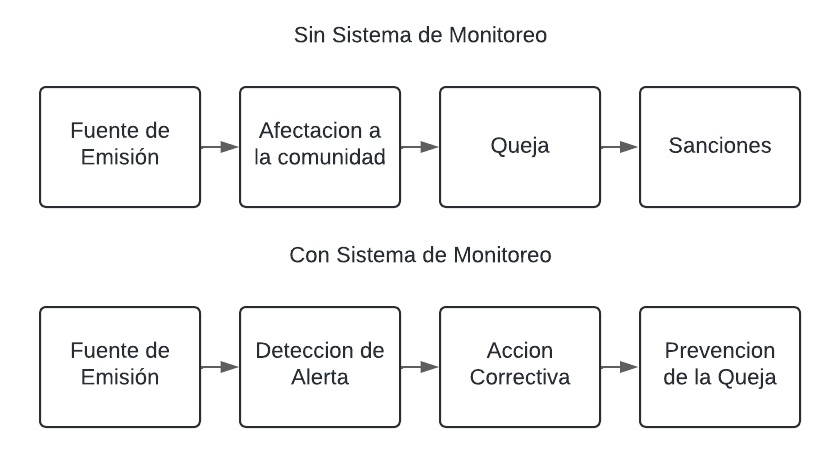
To address this, the city implemented a continuous improvement strategy, including a monitoring system for odor and H₂S concentrations, allowing for better prevention, control, and reduction of odors affecting the community.
J. Zapata*, J.Cortes, V. Florián.
Competing interests: The author has declared that no competing interests exist.
Academic editor: Carlos N. Díaz.
Content quality: This paper has not been peer-reviewed.
Citation: J. Zapata, J.Cortes y V. Florián, 2024, Odour Monitoring and Control System for the Sewage System of the City of Cartagena de Indias, Colombia, ODORA24 Conference, Barakaldo, Spain, www.olores.org.
Copyright: 2025 Olores.org. Open Content Creative Commons licence. It is allowed to download, reuse, reprint, modify, distribute, and/or copy articles in Olores.org website, as long as the original authors and source are cited. No permission is required from the authors or the publishers.
ISBN: pending.
Keywords: Data Science, Sewer System, Odor Management System, Hydrogen Sulfide.
Abstract
The city of Cartagena de Indias, declared a World Heritage Site by UNESCO, made a tremendous effort to clean its water bodies by eliminating discharge points in the city as well as collecting and treating 100% of the wastewater produced. However, these improvements brought unexpected consequences in terms of gas production and the generation of offensive odors from the wastewater collection, treatment, and final disposal system. This issue has forced Cartagena to define and develop a strategy that, under a continuous improvement framework, has enabled the diagnosis of scenarios according to the specific characteristics of the territory, evaluation of alternatives, verification from different fronts of the effectiveness of interventions, and, based on this, making pertinent adjustments focused on preventing, controlling, and monitoring the generation and emission of offensive odors. To integrate prevention, control, and monitoring strategies, Aguas de Cartagena has implemented an odor management system in recent years, allowing continuous monitoring at various critical points in the sewer system. Through constant monitoring of odor and H₂S concentrations at critical points in the city, and by integrating the data into a data science system, decisions can be made to implement or improve odor prevention and control strategies, aiming to reduce the impact of offensive odors on the community.
See the full article in other languages:
- French
- Spanish
- German
- Polish
- Arabic