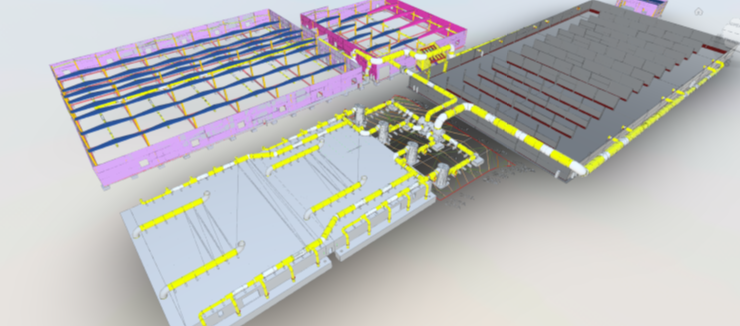
The new Copero Advanced Composting Plant, launched by EMASESA in Seville, addresses two main challenges: recovering sludge from urban wastewater for agricultural use and significantly reducing odor emissions impacting local residents.
Through innovative operational controls and advanced monitoring systems, the facility ensures efficient composting while minimizing environmental and social impacts.
S. Romero, E. Toro & F.J. Busto
Complejo Ambiental Copero. Dos Hermanas (Sevilla)
Competing interests: The author has declared that no competing interests exist.
Academic editor: Carlos N. Díaz.
Content quality: This paper has not been peer-reviewed.
Citation: S. Romero, E. Toro and F.J. Busto, 2024, The New Copero Advanced Composting Plant: A Challenge and a Success Story in Odor Treatment, ODORA24 Conference, Barakaldo, Spain, www.olores.org.
Copyright: 2025 Olores.org. Open Content Creative Commons licence. It is allowed to download, reuse, reprint, modify, distribute, and/or copy articles in Olores.org website, as long as the original authors and source are cited. No permission is required from the authors or the publishers.
ISBN: pending.
Keywords: Sewage sludge, recovery, fermentation, biofiltration.
Abstract
The composting of sludge from urban wastewater treatment plants generates an odor impact on the population due to the decomposition of organic matter and the subsequent release of volatile compounds. EMASESA, firmly committed to social and environmental sustainability, has launched a new Advanced Composting Plant in the Copero Environmental Complex, located in the municipality of Dos Hermanas, Seville. The new facility aims to respond through innovation to two great challenges:
- Recovery of sludge from Seville and a large part of its metropolitan area through composting for subsequent application in agriculture.
- Reduction of the impact of odor on the nearby population.
To minimize odor emissions, it is essential to have correct control of the installation based mainly on 4 aspects:
- Operational control of the fermentation process by monitoring variables such as temperature, humidity and oxygen of the material to be composted.
- Monitoring and control of the ventilation system through flowmeters and gas, temperature and humidity sensors installed inside the plant.
- Monitoring and control of the variables of the filter bed itself through the analysis of physical-chemical and microbiological parameters.
- Monitoring and control of air quality through an intelligent platform that integrates different data sources and information sources.
This article aims to share the experience of staging the Copero Composting Plant, and the Operational Control used to reduce the impact due to odor.
See the full article in other languages:
- French
- Spanish
- German
- Polish
- Arabic