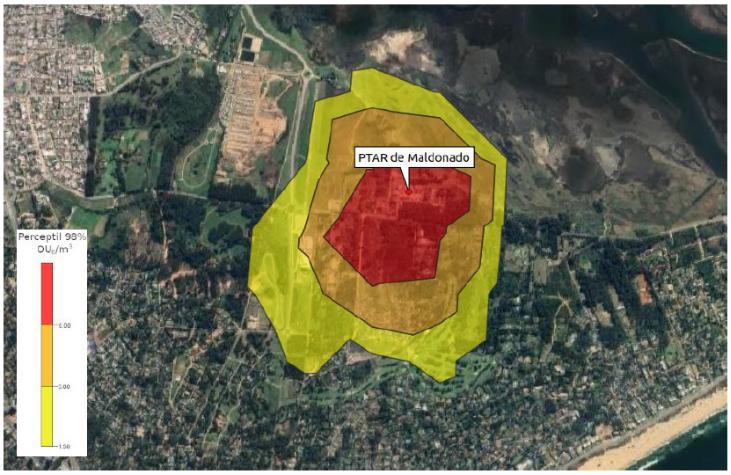
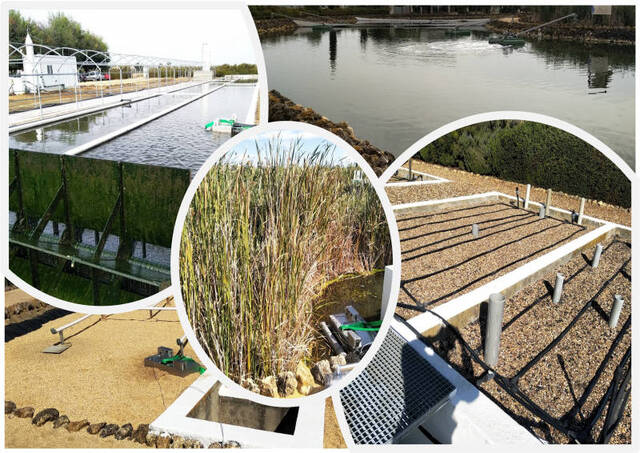
The emission of unpleasant odors in wastewater treatment plants is mainly due to the treatment of biological sludge, due to its high organic matter concentration. This study, conducted by CENTA in Carrión de los Céspedes (Seville), evaluates the efficiency of organic matter and nutrient removal, as well as the derived odor emissions from various technologies.
The highest odor emission rates were found in anaerobic lagoons, facultative lagoons, and septic tanks. Two indices were defined to relate odor emissions to the efficiency of organic matter removal (OGIC) and combined organic matter and nitrogen removal (OGICN). The highest efficiency values were found in free-flowing gravel wetlands and anaerobic lagoons. A principal component analysis grouped the technologies evaluated based on hydraulic retention time and pH.
Gutiérrez, M.C. 1*, Martín, M.A. 1, Ruiz-Muñoz, A. 1, Márquez, P. 1, Toledo, M. 2, Salas, J.J. 3, Siles, J.A. 1
1 Departamento de Química Inorgánica e Ingeniería Química (Área de Ingeniería Química). Facultad de Ciencias, Universidad de Córdoba. Instituto Químico para la Energía y el Medioambiente (IQUEMA). Campus de Excelencia Internacional Agroalimentario (ceiA3). Campus Universitario de Rabanales. Carretera N-IV, km 396, 14071. Córdoba, España.
2 Instituto de Procesos Sostenibles, Área de Ingeniería Química. Universidad de Valladolid. Dr. Mergelina, s/n, Valladolid, 47011, España.
3 Fundación Centro de las Nuevas Tecnologías del Agua (CENTA). A-49, km 28. 41820. Carrión de los Céspedes, Sevilla, España.
* mc.gutierrez@uco.es